Thursday, May 13, 2010

Off-shore drilling: We inlanders are “selfish”

So I’m poking around on HuffPost and I ran into an article about public opinion on off-shore drilling and many Americans (just over half in this poll, but up to 62% in an NBC poll) favor more off-shore drilling. I ran across this comment by a gentleman who lives in Cape Cod, MA:
Of course they do, selfishness rules when you don't live near the coast. Why should middle America give up on all their shizzle to save a beach. It doesn't impact them when there's a spill. Hell they never saw nor will they ever see the ocean. Besides fish comes in a can.


Readers of my blog know I favor less off-shore and on-shore drilling. Although domestic drilling has little effect on price, I hope drilling is reduced to the point where prices rise. Expensive petroleum products are the only way we can force Americans to conserve. Making huge strides in conservation/energy efficiency is the ONLY way we will ever become energy independent, which I think everyone can agree is a good goal.

However, those of us not located along the east or west coast have been paying the price of some energy development disproportionately. While people on the coast have enjoyed an off-shore drilling ban since Bush the First, we’ve been living with increasing oil and gas drilling in MT, NM, ID, CO, UT, WY, TX, OK, etc. for many decades now. Why are concerns of the people on the coasts worth more than ours? When rich elite in Cape Cod cry “Not In My Back Yard!” why should they get what they want while us rural folks in CO get the energy development? And we get called “selfish?”

I could take those same words and say this:

“Of course they support on-shore drilling, selfishness rules when you don't live in the west. Why should coastal America give up on all their shizzle to save a landscape in the Rocky Mountains? It doesn't impact them when there's a spill. Hell they never saw nor will they ever see the gas wells in the wildlife habitat and scenic landscapes.”

You cool with that east coast guy? You make a good point. But I have a problem with you applying it selectively to inlanders when we’re the ones who have been footing the cost for some time now.

Folks in San Fran and New Jersey get to drive their cars, heat their houses, and buy all their stuff while we inlanders foot the cost. It’s time for some energy equality. I do not support opening up more areas to drilling whether on the coasts or in the west. But if these smug east coasters keep calling us selfish I might have to change my mind. I think it’s high time we ALL pay the environmental and scenic costs of the energy we use, even Americans on the coasts.

Sunday, April 18, 2010

Tea Partiers pose a danger to this nation

No, this isn’t going to be an essay about how the Tea Party movement is encouraging violence. Yes, some conservative elements are throwing gas on a fire with dangerous consequences. But many other liberals have been writing about this so I find the topic a bit stale. I’m talking about taxes.

One of the issues—some may say the main issue—Tea Partiers are unhappy about is taxes. They say TEA stands for Taxed Enough Already. Really? Cause the non-partisan Center for Budget and Policy Priorities published a report this week stating that “Federal Income Taxes on Middle-Income Families at Historically Low Levels.” Federal taxes as a whole are near all-time lows. How can you be Taxed Enough Already when you’re taxed less than ever before? So we know the Tea Partiers are misinformed. Dangerously so. (This suggests the Tea Parties aren't about taxes at all, but "Taking back America" from those brown skinned gay people, but that's for another post).

Our budget deficit is gargantuan and everyone agrees it is important to balance our budget. To do that, we need to cut some spending. But we also MUST raise taxes. We have the lowest taxes of any developed nation and people wonder why we have a huge deficit.

But politicians are way too chicken to correct the problem. Making the necessary fixes will lose them their jobs because spoiled Americans will throw temper tantrums when their taxes are raised. The entitlement we Americans demand is ridiculous. The right’s crusade against generating income for our government is a cheap campaign ploy that is hurting our nation. Want to win an election? Just bash taxes! Our politicians can't do what's necessary because the entitled public won't vote for them. We will talk about cutting someone else’s programs and cutting costs, so we must also talk about raising taxes. I know taxes sux. Who likes takes? But they’re a critical part of any nation. If you want to cut the deficit, we MUST raise taxes. So either shut up about the deficit or shut up about raising taxes. You can’t have your cake and eat it too. Get used to that reality and quit crying.

The Tea Partiers are exaggerating this problem. They are again reminding politicians that it would spell trouble for their election hopes if they did the necessary thing and raised taxes. By whining about taxes, they are forcing politicians to make the same tired promises about no new taxes or cutting taxes. They are preventing us from correcting this important crisis. Even the Dems are on board. Obama has cut taxes on top of the Bush tax cuts (although thankfully Obama is raising taxes for the richest 5% of Americans). This harmful trend is going to increase our budget deficit and create problems down the road.

One more Tea Party observation before signing off. A recent poll of Tea Partiers showed they are generally wealthier and more educated that the average American. So, rich, white Christians complaining that they’re not represented by our rich, white Christian politicians. Forgive me if my heart doesn’t go out to them.

Saturday, April 17, 2010

Extremes in the wild horse issue

Some radical wild horse advocates just keep repeating the same misinformation over and over, hoping people start to take it as truth. This is illustrated by this thread on a High Country News article.

A common WH advocate talking point is that horses are native to North America. EPA defines introduced species as “species that have become able to survive and reproduce outside the habitats where they evolved or spread naturally". The early American horse had been game for the earliest humans on the continent. It went extinct about 7,000 BC, just after the end of the last glacial period (as a poster mentions, this was a different species than the horses here now). Thus it did not evolve here or spread naturally but was spread by Spaniards and other Europeans who brought horses to the Americas in the sixteenth century. If WH advocates claim horses are native because an animal they descended from ran here thousands of years ago, then elephants are native too. But you know what? It really doesn’t matter. We humans manage native wildlife and we manage introduced wildlife. But WH advocates want no management of wild horses at all. This is an unreasonable position IMHO.

The second is that wild horses do not destroy native ranges. In fact, one advocate has even contended that they “enrich habitat.” What? Folks, this isn’t that hard. A non-native species in large numbers is not enriching habitat. Then we have a poster who contends that horses do not compete with native wildlife. Whoa. Really? Gee, I didn’t know the forage out there was labeled and horses left the forage assigned to the wildlife alone. These are not well-thought out assertions from people who are speaking from emotion. I agree with what many say about ranching and too much livestock on public land. But this in no way legitimizes their agenda to have thousands of wild horses running free destroying the range. This is like when a 5-year old child tells his parents it’s okay to do something bad because their friends do it. If we don’t let small children get away with this, we shouldn’t let WH advocates get away with it either.

The third talking point is that BLM is lying about science and breaking the law. However, WH advocates sue BLM nearly every time they gather wild horses and they almost always lose. Because the agency knows they’re going to get sued every single time they pick up a WH, they are very diligent in gathering range data in Herd Management Areas. WH advocates tried to stop the massive round up in Nevada several months ago. The judge, again, ruled in favor of BLM and the gather went on. If BLM data are cooked, why are they winning gather litigation? Dozens of judges are not part of this conspiracy. You are losing all these gather court cases because you’re lying about who has the accurate science. And the assertion that BLM is "managing wild horses to extinction" is laughable. There are currently 37,000 wild horses and burros still roaming public lands, up from 25,345 in 1971.

Wild horses are an extremely emotional issue. What we need are fewer extremes. We need logical solutions, not radical ones. We shouldn’t be considering euthanizing horses. That’s extreme. But radical solutions are the only ones acceptable to most WH advocates. In every single issue we see on public lands, there has to be some compromise. But too many WH advocates don’t seem to know the meaning of the word compromise.

Neely writes “Wild horse lovers tend to prefer contraception to roundups,” which is true. However, the fact is that many WH lovers also detest contraception, saying it’s cruel. So as far as population control options available, round ups are out, and so is contraception. What does that leave? NOTHING. No management of wild horses. Let them breed at 20% recruitment rates forever. Let thousands, then hundreds of thousands of horses destroy our native ranges.

Make no mistake, this is exactly what some WH advocates want. There are moderate WH advocates, who do a lot more good for horses than these radical ones: http://www.gjsentinel.com/lifestyle/articles/local_group_blm_work_together. Too bad these sensible voices are drowned out by the radical. There is room for WHs on our public lands. They have a place there. But these lies and extreme positions are not helpful in managing our ranges effectively.

Saturday, January 23, 2010

Think international aid is helping Haitians? Think again.

Over the last 30 years or so, international “aid” NGOs have completely taken over Haiti. From 1990 to 2005, the international community has given Haiti over $1.47 billion in aid. International aid NGOs have taken over every aspect of government and civics in Haiti: education, security, banking, justice system, heath care, food, etc, all provided by donors. US has dumped so much subsidized rice on the country it has killed all incentive for Haitians to farm and grow crops for themselves. All this, and how has it helped the Haitian people? The 153rd poorest country out of 177. 75% of the population living on less than $2 a day. Donors have stripped the Haitian government and people of all normal responsibilities and duties. Haiti can’t stand on its own feet anymore.

This is what the international aid apparatus does. It sets up camp and starts the aid machine running. Once it gets running, it self-perpetuates and little can stop it. The mission of these huge aid NGOs is to stay in business. The NGOs need more and more money to keep up, or better yet grow, their staffs. They pitch any project, regardless of how much it will help the poor, because it can bring them money. They spin their reports, claiming success, or blaming the difficult Haitian masses for failures. They grow, and grow, making more Americans richer, and making the Haitian elite richer. The corrupt Haitian government and elite are plugged into the aid machine, who siphon off all kinds of international money. More corruption, more money for the bad guys, and the poor are left with nothing.

Now the international aid community is licking its chops now after the devastating earthquake. They’ll definitely capitalize on the bleeding hearts and try to push for even more takeover of the country. International Monetary Fund (IMF) director Dominique Strauss-Kahn wrote a piece for the Huffington Post entitled Why We Need a "Marshall Plan" for Haiti. Strauss-Kahn asserts:

A first donors' conference is scheduled to take place in Montreal next week, in preparation for a larger conference in the spring that will mobilize financing for Haiti. I hope the contours of such a plan will start to take shape through the process begun in Montreal.

Sweet! Any guesses on how many token Haitians are at that conference planning the future of their country? One or two? I’d say 50:1 ratio of donors to Haitians, if we’re lucky. This is exactly what got Haiti into trouble in the first place. How can we trust these people to plan for Haiti. We know what they’re going to say “MORE AID! Hurrah!”

The less the US medals in Haiti’s affairs, the better off the Haitian people will be. Stop influencing their elections and overthrowing leaders who won’t carry our water. Support who the people voted for, even if they don’t want to move all their people to the cities for manufacturing jobs. Quit dumping cheap American goods in the country, rendering their economy useless, and correct unfair trade laws. Start pulling all international aid NGOs out of the country and let these folks stand on their own two feet. Or, at least we need a filter to make sure only good, effective aid takes place. The kind that builds capacity instead of giving things out. The kind that provides small loans so people can start businesses.

Don’t take this as opposition to giving money for disaster assistance. That money goes directly to saving lives. But if you want to help Haitians more than that, I’d urge you to do some research on who you’re donating to and think about how it might hurt Haitians more than it helps.

References and some other reading:

Why Foreign Aid to Haiti Failed
, a report by the NATIONAL ACADEMY OF PUBLIC ADMINISTRATION

To Help Haiti, End Foreign Aid

Monday, January 18, 2010

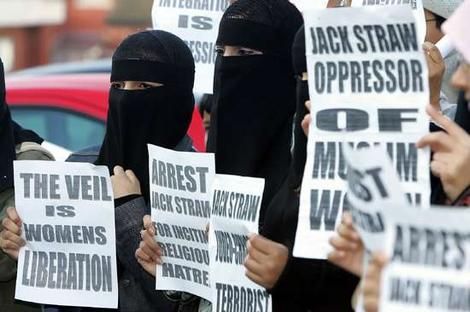
Follow up: Muslim women and the veil

So I was thumbing through my January/Februry Playboy and flipped to my favorite part of the magazine, the reason I continue to spend $30 a year to keep my subscription, the Forum. This month the featured a fascinating piece by Malise Ruthven called “Decoding the Veil: There’s more than meets the eye when it comes to the women of Islam.” Timely, considering my rant on the same subject. I really wish I could find it on-line so I could share it with you, but a summary should do, along with a few words about how it confirmed my opinion on France proposing to ban the burqa.

Ruthven’s history lesson started in the days of slavery. In the days of Islamic colonization, they took many slaves in the communities they conquered. These slave women, who were often hired as concubines, were allowed to bear their entire body, except from bellybutton to knee (the men had to be able to see what they were purchasing). When they got married they were no longer considered to be slaves. They would proudly wear the veil, a status symbol of respectability that told people they were wives, no longer slaves.

This symbol of emancipation is still alive in Islam today. “A thousand years of history in which women are the guardians of family honor and respectability is equated with concealment and physical display with slavery are not going to fade overnight,” Ruthven writes. He goes on to explain how the veil also symbolizes resistance to foreign conquest. This connection still stands today. Ruthven states:

In Western cultures, where personal worth is often judged by appearances, [the veil] still symbolizes a type of resistance. The veiled woman defies the tyranny not so much erstwhile colonial masters (though the associations may be there) but of a globalized fashion industry that diminished women who fail to conform to its youthful and elegant norms. Young women who don the veil in Western countries often explain that it gives them back control of their bodies, making them feel less like sex objects.


So, as in most issues, there is much more to the story than we might have thought. This all reinforces my point that the veil is not strictly religious; it’s also a powerful cultural symbol with multiple meanings. France can talk a mean game about keeping religion out of the public sphere, but do they know, or do they care, that they’re also keeping other’s culture out of the public sphere? It also explains why so many Muslim women want to wear the burqa. It’s not that all of them are brainwashed by their religion or forced by their husbands. Because of the deep history of the veil, many women in Islam are proud to wear it. They should have the choice to do so.

Saturday, January 16, 2010

Banning the burqa: progressing freedom or limiting it?

It’s been a while since I ranted. I read a stat the other day that 70% of blogs in the US haven’t been updated in 4 months. Better make sure that freshconsciousness doesn’t fall into that category.

You might have heard about how the French government is considering a law that would ban the burqa anywhere in public.

France Moves Closer to Banning Burqas

It wouldn’t ban the Muslim headscarves, just Islamic dress that covers the face. The proposed law states, "No one may, in spaces open to the public and on public streets, wear a garment or an accessory that has the effect of hiding the face.”

The French see it as a religion in the public sphere and as symbol oppression of women. “Here, it is widely viewed as a gateway to radical Islam, an attack on gender equality and other French values, and a gnawing away at the nation's secular foundation.” This isn’t unprecedented in Europe. France previously banned Muslim headscarves and other "ostentatious" religious symbols in the classrooms of French public schools, and Switzerland recently banned minarets.

This is a complicated topic and I’m somewhat conflicted. Ultimately, I think banning certain clothing is an affront to liberty and the freedoms western democracies were founded on. If I certainly can’t agree with Muslim women being forced to wear the burqa like they are in Saudi Arabia or Afghanistan, I also can’t agree with a government forcing women to not wear them.

The burqa may be a symbol of oppression to some people inside and outside of Islam, but not to everyone. And while some claim the burqa is a religious symbol, it’s also a cultural symbol to some. Some women claim they like to wear one, to show their pride in their culture, or to be more spiritual.


It seemed like most people who commented on the Huffington Post article agrees with the ban. Some raise the point that all governments regulated dress to some degree, and Germany even banned Nazi symbols. Good point; the issues are similar. Even though the burqa might not carry the same hate, violence, and evil, it does to some degree. So if you forced me to be consistent, even though banning swastikas is easier to digest, I guess I wouldn't support that either. The article states that the proposed law to ban burqas “cites public security concerns, thus includes all face-covering clothes, in a bid to head off challenges from those who might claim such a law would violate constitutional rules on individual rights…” So now we’re banning things out of fear? That makes it even worse. If fear for public safety is the reason they’re banning burqas or Nazi symbols, I can’t support that.


One poster commented that “Ban the burqua and ban all fundamentalist religious sects which express hostility to secular Western values and democracy.” Excuse me? Since when is BANNING things is “Western values?” Where does this stop? This puts liberty on a slippery slope where governments get to decide what constitutes “Western values” and force society to comply. That sounds more like fascism than democracy. It’s also an affront to diversity. In the name of assimilation and conformity, the French aren’t willing to accept people that are too different, cultures that challenge their secular world-view. They want to maintain their “French flavor.” Coming from a melting pot country, that sounds elitist, intolerant, and bigoted. Slip any further down this slope and you’re talking about banning religious or cultural practices. Additionally, as far as liberating women goes, it might have the opposite effect, keeping Muslim women even more hidden:

"We won't be able to leave the house," said Oumeima Naceri, a 19-year-old convert draped in black garments, including a filmy "sitar" veil covering even her eyes. "That frightens us enormously ... It's like asking us to go naked."


Muslim women should have the freedom to wear what they want. In progressive Muslim cities like Cairo and Istanbul, women can wear a scarf, a burqa, or nothing. (Granted, there may be some bad stigmas attached to women who don’t cover). We should help fight for this right, as way too many Muslim women don’t get a choice. We should assist Muslim women in their fight within Islam to force this change. Forcing a change from outside only increases atomicity and can sometimes lead people to dig their heals in and resist the outside pressure.

I think I’ve put forward a pretty good case that banning the burqa slights liberty, it does not expand it. However, I will leave you with a comment that almost made me change my mind:

IF you had been born female into a family that believes that you cannot go against Islam in any way--for instance the kind of family where one goes into the streets to protest against a cartoon drawn by some Danish guy (and how many thousand did exactly that?)

THEN you would have learned from a very young age that you don't challenge a religious obligation, you don't show any religious dissent whatsoever

THEN you would know that the person who feeds you and keeps you has all the power and could go ape-shit on your ass at any time

THEN you might be talked into a burka and feel safer with it than without it

THAT DOESN'T MAKE IT RIGHT

If France--where I live--we believe in religious dissent and freedom FROM religion in the public sphere. We know damn well that as soon as young Muslim girls go home they are subjected again to a steady regime of ask no question, comply, pray and obey. But we demand to see their faces and look into their eyes because they are people, not shadows.

Thursday, November 26, 2009

International conservation NGOs

So like a good liberal I was brousing The Huffington Post the other day. I came along this article: Ashley Judd: Please, Population Control is Not the Answer for Congo.

I posted a comment, this time with my credentials, and the author Georgianne asked to chat with me about international development NGOs working in the region. She sent me two interesting reports:

A Challenge to Conservationists


MID-TERM ASSESSMENT OF THE CENTRAL AFRICAN REGIONAL PROGRAM FOR THE ENVIRONMENT (CARPE
)

It brought me back to grad school. One of my professors, Dianne Rocheleau, used to tell us about this kind of conservation. She dubbed it “guns and fences conservation.” Erect fences, and guard the reserve with guns so none of those destructive peasants can get in. Besides being unethical, it just doesn’t work. I’d ask you all to boycott donating to these agencies, but unfortunately, these NGOs derive extremely little of their funding from private donations, so there’s little we can do as normal citizens.

I found the critiques of TNC interesting, as TNC is one of the conservation organizations in the US I respect the most. As opposed to some other big national and regional NGOs, they do work directly with local communities in the west. They pay attention to all science, not only the stuff that suits their cause, and they hardly every exaggerate or lie, which is the MO of many other organizations. They put their money where their mouth is, spending it on buying land and putting conservation easements in place instead of lobbying above the communities’ heads and suing agencies. This is how the conservation movement game is played in America. While The Wilderness Society and Colorado Environmental Coalition is hated by locals in rural Colorado (some for good reasons, some not), TNC is not viewed as a “radical environmental organization” and is (relatively) well respected by the rednecks. I definitely consider myself an environmentalist, but after working years with some of these big conservation NGOs, I’ve become quite jaded. Like international aid, it’s all about the money.

As the author Chapin infers, we must work with communities not only because building the capacity of these communities to prosper, but because no matter how many fences you put up, no matter how many men with guns guard your sanctuaries, the disenfranchised people will use their traditional resources and you won’t meet your conservation goals. I also liked the fact that Chapin mentions that the true goal of an NGO is to work yourself out of a job. This NEVER happens. That’s not the way The Aid Machine works.

It’s all about keeping The Aid Machine running. People have jobs that they want to justify. NGOs have to keep spending money, regardless of the effectiveness, or the money dries up. They take the money and hire more people. They flail around for several years because doing true community-driven conservation is hard. But they will never refuse the money and say “sorry, this project just isn’t working.” That would mean no more funding stream. This is why I call it The Aid Machine. It is self-perpetuating, always feeding itself. It hardly every shrinks, only grows. Chapin had some startling insights on where these NGOs get their money and how that relates to their mission. These groups HAVE to keep getting money to survive, and soon they don’t care where it comes from, or what projects it goes towards. They just need to spend it, or next year they don’t get any. This is the problem of international aid. It’s not about helping, it’s about spending.

As far as the assessment of the CARPE program, it seems to me working with local communities was never really a goal of this program in the first place. Sure enough, this is called out several times in the report.

“Progress in working with forest concessions and in establishing community based natural resource management (CBNRM) reserves is limited.”

“Capacity Building: The mix of NGOs and federal agency service providers has not effectively addressed the capacity building objective. NGOs have strengthened park management and surveillance capacity, but impact on Community Based Organizations (CBOs) and local NGOs has been much less effective.”

By focusing more on enforcement and less on communities, it becomes clear that these agencies are doing “guns and fences conservation.” It seems that inviting the local communities to participate in conservation isn’t even a goal of this program. Look at the second strategic design element:

“2. A set of mostly US-based organizations that work across landscapes in common thematic areas such as multiple-use planning, forest monitoring, policy and governance and uncontrolled hunting;”

More enforcement. No where in the strategic goals is anything about working with local communities; no where is there anything about poverty reduction. The people of Congo are largely ignored and forgotten.

I found the constraints that were identified quite interesting:

“The main constraints to progress at the landscape scale include: remoteness, difficult access to the sites, lack of an information base for planning/management, lack of infrastructure, lack of agreements in place to work with government agencies mandated to manage lands outside of PAs, low tourism potential, and low local partner capacity. In several landscapes, insecurity makes access impossible or dangerous in parts of the landscape.”

First, we are told it’s hard to get white people into these places, and it’s dangerous. Um, why not leverage the support of the local communities then? It is inferred that the natives are difficult. “If those damn Africans would just get with the program and build roads, quit fighting, and partner with us, we would be fine.” No sign that the program itself is the problem. To them, Africans are passive recipients of aid, not active agents in change.

It's really too bad international conservation NGOs play the game this way. No wonder aid to Africa isn't working.